
Our friends were leaving us this morning, so we all got together and decided to have breakfast at Bartist. There’s nothing interesting other than the very cute waiter/cashier guy. I had muesli with fruit and coffee. Do I like that? No. Not really. But after getting sick in Scotland for basically putting my body through hell by eating trash food for two weeks, I had decided to ensure that I was not living like some sort of decadent royal at every meal of the trip.
Food is so important to me when it comes to vacationing and experiencing other places. I don’t really need to eat delicious pastry every day, even though I want to. I wouldn’t do that in my everyday life, so I just need to give your body some sort of almost healthy foundation. Our friends had already begun checking emails and voicemails. Even though we were saying goodbye and we were certainly sad to leave each other, you could tell their minds were already back at home. We said goodbye and then went to explore Museum Island.
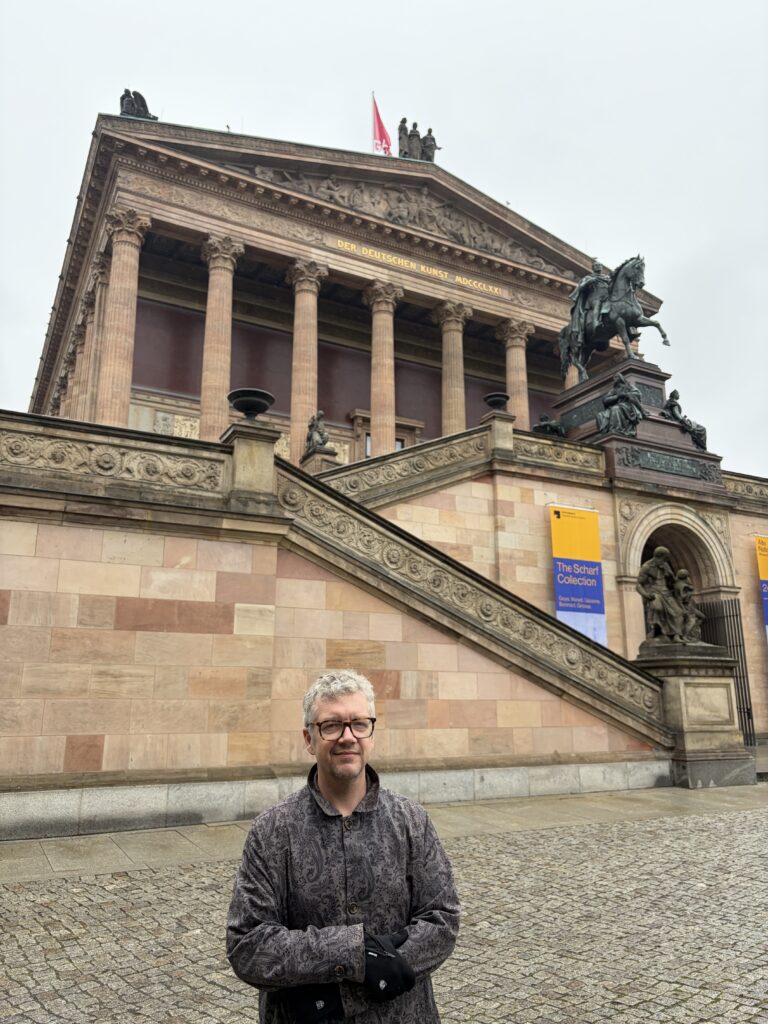
We started at the Alte Nationalgalerie and the special exhibition of Lovis Corinth, which I did not care for, which is more about my taste than my understanding of art in general. However, the pieces I did like jumped out to me as showing mastery of the skill, and each one showed some level of perspective and depth that was technically impressive. I enjoyed works by Adolph Menzel, Constantin Meunier, Honoré Daumier, and Carl Blechen. It’s undoubtedly a lovely gallery. Berlin has no shortage of art, but this gallery generally focuses on German artists, which I just do not know very well. I did spot the one van Gogh that was hiding out in the museum, and of course, that one will always impress me.
#/media/File:Berlin,_Alte_Nationalgalerie,_Honor%C3%A9_Daumier,_Don_Quichotte_und_Sancho_Pansa.JPG)
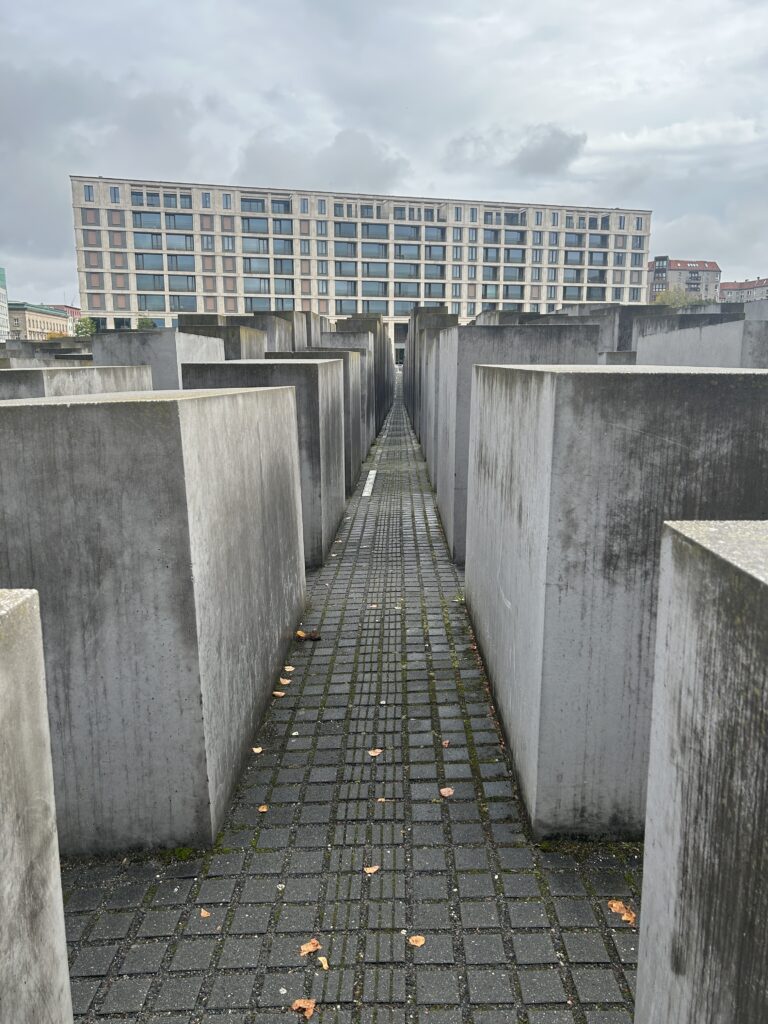
From there, we walked back towards the Brandenburg Gate, where we saw both the Memorial to the Murdered Jews of Europe and the Memorial to Homosexuals Persecuted Under Nazism. The Memorial to the Murdered Jews of Europe is very impressive. It’s unassuming with its rising solid blocks, but the sloping nature of the floor envelops you inside the memorial very quickly. You’re in the middle of a city, in the middle of the tourist zone, and you will literally find yourself alone and isolated with only the sky and maybe the random shadow of somebody walking through a nearby aisle. Really fascinating. The Memorial to Homosexuals Persecuted Under Nazism was very nice. I’m glad it’s there, but certainly not as dramatic as the Jewish memorial.
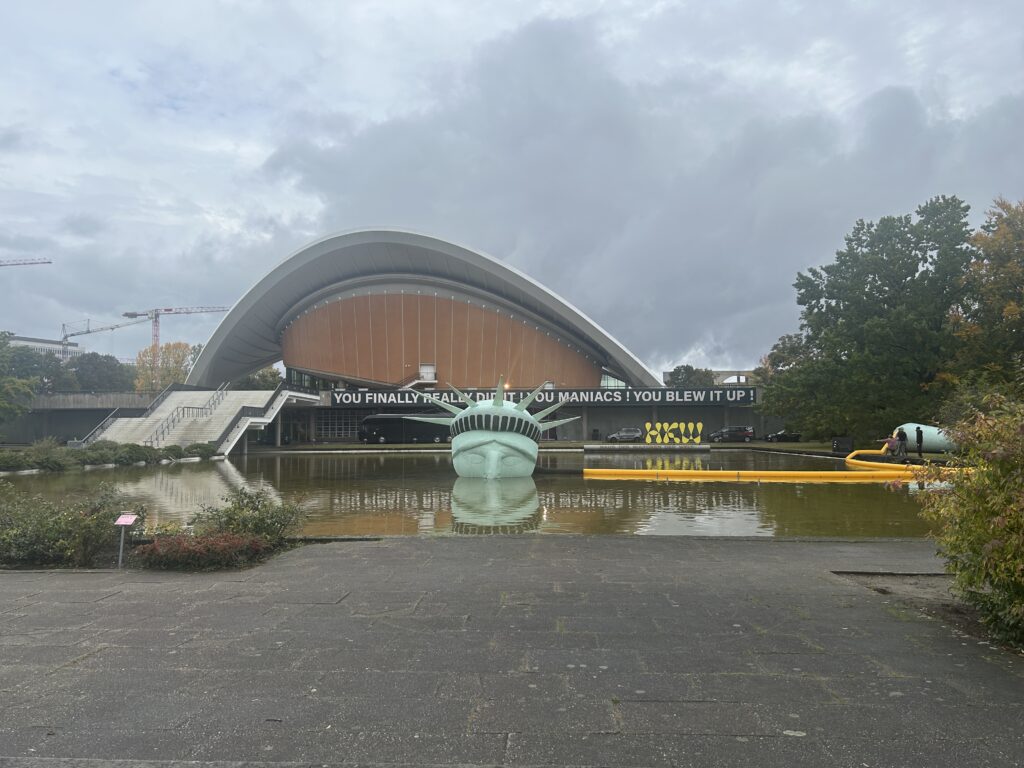
Afterward, we visited the Haus der Kulturen der Welt to see the Global Fascisms exhibit. I did not care for this exhibit. First off, the program for identifying each piece of art and who made it was incomprehensible. You had to use the map to locate which piece of art you were looking at spatially, then on the map that would have a number, and then you would flip to that number on the page of the program and read about it—but things were not always lined up precisely. It was incomprehensible. I hated it, and it made me have a bad taste in my mouth about the exhibit the second I walked in. I was more preoccupied trying to figure out what I was looking at than actually taking a moment to enjoy the art. The connection to portraying fascism in the modern world seemed far-fetched and not explicit enough. At the end of the day, it was a hodgepodge collection of outsider art. Maybe the video exhibit I saw by Yoonsuk Jung, of the workers in the sex doll factory, was the most interesting, because it did show the juxtaposition of the exploitation of labor next to the dehumanization of the female body, sort of both being captured in the exact moment. Everything else was just not that interesting, and saying anything about global fascism as a connecting theme was far-fetched. I do not believe that an average person encountering that exhibit would learn much from it. It felt like navel-gazing and entirely out of step with what’s needed to confront the rise of global fascism.
Annoyed by the exhibit and eager for something enjoyable, we grabbed lunch at Café Mom & Son, near the Schwules Museum. I had a turkey-and-cheese flaguette. It was good and straightforward.
The Schwule Museum is not a must-visit museum. I’m glad it’s there—it’s been there a long time and it’s very important—but it wasn’t earth-shattering. I probably learned the most from the “Burning down the Patriarchy. The Berlin women and lesbians’ scene photographed by Petra Gall” exhibit about queer women and photography. The exhibit about queers in Ukraine was compelling because I hadn’t thought much about that. I didn’t realize that men right now are not allowed to leave Ukraine, which means gay men are functionally trapped there, as all men are. And I’m sure that’s not easy, with there being actual organized Nazi militias involved in the conflict. And for the queer Ukrainian men trapped on the Russian side, the Russians aren’t putting a good foot forward when it comes to queer rights. It was thought-provoking and interesting, and just stuff I hadn’t considered.
That night we went to the Elefant restaurant, which was the first neighborhood German restaurant we visited. We didn’t make a reservation. We just walked in, sat down at the bar, and ordered our food. I think this was my favorite German meal out of the entire trip. We were staying in a gay neighborhood, and subsequently, all of the clientele and all of the staff were gay, so it was like you were in this big German gay house being fed delicious German food. I loved it. I would recommend this restaurant over and over again. I almost wanted to go there a second time just to have other food on their menu. I kind of wish I had gone there on Friday night instead of the restaurant we went to. It was good. I had Kohlrouladen—cabbage roulade, which I read was Angela Merkel’s favorite dish.
After dinner, we went for cocktails at The Hat Bar Berlin. It was great to see live music. This bar is a jazz club, and they make great cocktails. I was drinking nonalcoholic cocktails that night, and both were really good. The bartenders were super cool. One was probably an American. The jazz was great. There was a bass player and a guitar player, but the percussionist was outstanding—just a very talented jazz musician. We both commented on how it seemed to have a bit more melody than a lot of jazz we listen to in the United States, and I’m curious if that’s more of a European thing than a North American thing. I want to learn more about it.
Next: Germany – Day 6