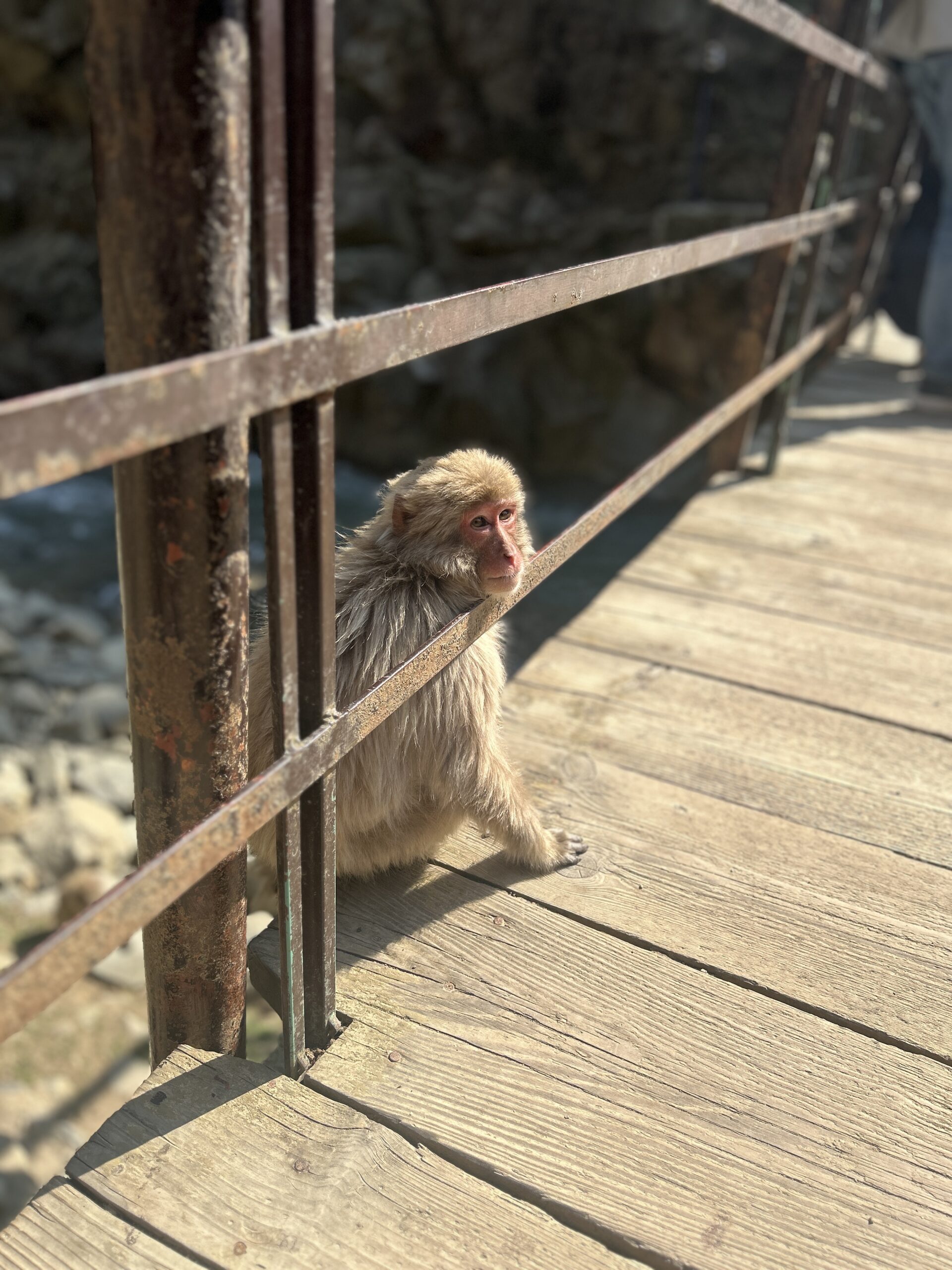
When we decided to take this trip, Samer said he wanted to see the Japanese monkeys that sit in hot springs. Seeing these monkeys became an anchor point among the many itineraries we considered. We found them at the Jigokudani Monkey Park, tucked into the mountains of Nagano. The park houses a troop of wild Japanese macaques who spend their winters soaking in natural hot springs.
I hired a tour company called Snow Monkey Resorts for about $140 for the day. All you need to do is arrive in Nagano by 9:30 AM. Since Nagano is 140 miles from Tokyo, we started early, but Japan’s train system made the trip easy. We took three trains: first a subway, then a local train to a major station, and finally the bullet train to Nagano. Even during the chaos of Golden Week, we made the journey with no trouble.
Our guide, a friendly German guy, began the tour at Zenkō-ji Temple in Nagano. This temple, founded over 1,400 years ago, is famous for housing what many believe to be the first Buddhist statue brought to Japan, though the temple keeps it hidden from public view. Beneath the altar lies an underground passage where visitors walk in complete darkness, searching for a key said to bring enlightenment. We didn’t try it, but our guide described it to us. Outside, shops lined the temple grounds. Since Nagano is known for apples, we bought a few apple sweets. Afterward, we visited the Nishinomon-Yoshinoya Sake Brewery for a tasting—something I had wanted to do. We bought a few bottles to bring back to the U.S.

We boarded the bus and headed to lunch at Hotarutei, a traditional Japanese restaurant where all the food is steamed. We ate steamed beef and vegetables, which locals told us are typical of the region—likely because of the abundance of hot springs and thermal vents. The food tasted good, but most of the flavor came from the dipping sauce. We didn’t linger, eager to see the monkeys, so we ate quickly and walked to Jigokudani Monkey Park.
To reach the park, we hiked about 30 minutes through the woods, a beautiful walk that made the adventure even more special. You don’t need a tour to do this trip—you could plan it yourself and save money—but Snow Monkey Resorts handled everything smoothly, which made it worth it for us.
Even before we reached the gates, we spotted monkeys. These monkeys, like all monkeys, looked adorable and showed no fear of humans, since the park staff feeds them. The park isn’t a zoo—it’s more of a refuge. Development drove the monkeys from their original mountain habitat, and Jigokudani became their haven.
This was a lot of fun. There are so many Monkeys walking around. Babies and their parents are so cute that you totally get lost watching them groom. The monkeys do not touch you, but they do not get out of your way, and if they are walking toward you, they expect you to step to the side. It was too warm for any of them to get into the onsen, but they certainly lounged near it.
We spent almost two hours snapping photos and watching them interact. They amazed us. This trip gave us a refreshing break from Tokyo, and Samer checked off his one Japanese bucket list item. I liked Nagano enough to think we could have stayed overnight and enjoyed it.
We returned to Shinjuku and had dinner at a fantastic izakaya called Hakata Oden and Wild Yam Yokayokado. With only about 15 seats, we sat at the bar and enjoyed drinks and a mix of dishes. One standout was Thick-Cut Nagasaki Unzen Ham Katsu, which I swear was deep-fried Midwestern ham loaf—delicious. They also served pickled firefly squid in ink topped with potato salad—not my usual style, but still tasty and distinctly Japanese. Naturally, we ordered fried chicken (karaage), which felt mandatory.


From the bar, we could watch everything being prepared. At one point, I noticed a rare mistake: a dish either forgotten or made incorrectly. No one yelled, but the staff suddenly switched to another language—different from Japanese—which made me realize that immigrants also work in Japan’s restaurant industry, much like in the U.S. Once they fixed the error, everyone returned to speaking Japanese.
After dinner, we went to a gay bar called Dragon Men, which I had seen in a YouTube video. It’s famous for its Go-Go dancers, but I hadn’t planned the timing right. Without performers that night, it was just a bar—cute, but nothing special. We had a drink and headed home. Osaka still gets my vote for the best gay scene in Japan.
Next: Japan – Day 12: Tokyo